
God of War 6 is already one of the most anticipated games in the industry, even though it has not been officially revealed. After the emotional and explosive ending of God of War Ragnarök, fans are asking the same question: what comes next for Kratos?
The hype around God of War 6 keeps growing as players speculate about the God of War Ragnarok sequel, the next mythology setting, and the true direction of Kratos’ continuation. Santa Monica Studio closed the Norse saga, but they clearly did not close the door on the franchise.
So what is God of War 6, where could it take place, and when might it release? In this guide, we break down everything we know about the Future Game, the gow next chapter, and the consequences of the Norse ending.
The Legacy of the Norse Saga and God of War 6
The road to God of War 6 starts with the ending of God of War Ragnarök. The Norse saga, which began in God of War, completely reshaped Kratos as a character.
At the end of Ragnarök, Kratos breaks the cycle of vengeance. Instead of becoming a destroyer of worlds again, he chooses hope. That decision defines what the God of War Ragnarok sequel could become.
The Norse ending showed us something new: Kratos as a symbol of rebuilding, not destruction. And that changes everything.
What Happened at the End of Ragnarök?
The final moments revealed:
- Asgard falls.
- Odin is defeated.
- Atreus leaves to find the remaining Giants.
- Kratos sees a new prophecy of himself being worshiped.
This mural scene is crucial. It hints that Kratos’ future is no longer about revenge, but leadership. That revelation directly shapes the direction of God of War 6.
Why the Norse Ending Matters for the Next Game
The Norse arc officially ended, according to Santa Monica Studio. However, Kratos’ journey clearly did not.
Instead of setting up another immediate Ragnarök-level catastrophe, the ending opens narrative space for:
- A new mythology
- A new role for Kratos
- Possibly a new emotional conflict
The gow next installment will likely build on this transformation rather than reset it.
Where Could God of War 6 Take Place?
If God of War 6 leaves the Norse realm behind, the big question becomes: which mythology comes next? Santa Monica Studio has previously confirmed that multiple mythologies were considered during development. Cory Barlog even mentioned that Egyptian mythology was once a serious option. Here are the strongest candidates for the future game setting.
1. Egyptian Mythology
Egypt is the most popular theory. Why?
- Ancient gods like Ra, Anubis, and Horus offer powerful antagonists.
- Desert landscapes would contrast beautifully with the frozen Norse realms.
- The mythology fits God of War’s epic scale.
Egypt was reportedly considered before the 2018 reboot settled on Norse mythology. That makes it a strong possibility for God of War 6.
2. Mesoamerican Mythology
Aztec or Mayan mythology could bring:
- Jungle environments
- Ritualistic gods
- Brutal warrior cultures
This would feel fresh while keeping the intense tone players expect.
3. Japanese or Celtic Mythology
While less likely, these settings offer:
- Samurai-era gods and spirits
- Dark Celtic legends and war deities
Each option would allow for new weapons, enemy types, and combat systems. The God of War Ragnarok sequel must evolve visually. A new mythology would guarantee that.
Kratos Continuation: What Is His Role Now?
One of the most important aspects of God of War 6 is Kratos’ continuation as a character. He is no longer the Ghost of Sparta driven by rage. He is now:
- A father who let his son choose his own path.
- A god who chose mercy.
- A leader who may rebuild instead of destroy.
This evolution changes the entire tone of the franchise.
Will Kratos Still Be the Main Character?
Yes, most likely. Although Atreus (Loki) is now traveling alone, Santa Monica Studio has built the rebooted saga around Kratos’ growth. Removing him entirely would undermine that arc.
However, a split narrative is possible:
- Kratos rebuilding in a new land.
- Atreus exploring Giant lore elsewhere.
This dual structure could define the gow next experience.
Could Atreus Get His Own Game?
Many fans believe the God of War Ragnarok sequel might focus more heavily on Atreus.
At the end of Ragnarök:
- Atreus leaves to search for Giants.
- He embraces his Loki identity.
- He steps into independence.
This setup is perfect for either:
- A full Atreus spin-off.
- A shared protagonist system in God of War 6.
If Atreus leads part of the game, expect:
- More agility-based combat.
- Magic-focused abilities.
- Greater narrative exploration.
Still, Kratos remains the heart of the franchise.
Gameplay Evolution in God of War 6
The combat system introduced in 2018 and refined in Ragnarök is already exceptional. But the future game must innovate.
Possible improvements include:
- Expanded weapon variety.
- New elemental systems.
- Larger semi-open regions.
- More vertical exploration.
A new mythology would justify new combat mechanics. For example, an Egyptian setting might introduce:
- Sand-based traversal mechanics.
- Solar god powers.
- Massive temple boss arenas.
Every gow next entry historically reinvents gameplay. Expect nothing less.
Performance Matters in Story-Heavy Action Games
Games like God of War 6 rely heavily on:
- Cinematic timing.
- Precision combat.
- Fluid camera transitions.
- Quick reaction inputs.
Even small performance issues can break immersion. If you play online titles or action-heavy games regularly, tools like ExitLag help stabilize your connection, reduce packet loss, and optimize routing. While God of War itself is single-player, maintaining a stable gaming setup across all your games ensures smoother performance overall. When you’re facing a mythological god, the last thing you want is lag.
When Could God of War 6 Release?
There is no official release date yet. However, we can analyze development patterns:
- Santa Monica Studio released God of War (2018).
- Ragnarök launched four years later in 2022.
If that cadence continues, God of War 6 could arrive around 2026 or later. Game development cycles are longer now. Especially for AAA titles built for PlayStation 5 hardware.
Expect:
- A full PS5-exclusive experience.
- Advanced graphics.
- Larger world scope.
The God of War Ragnarok sequel will likely push the console to its limits.
Will It Still Be Called God of War 6?
Probably not. The reboot avoided numbering. Instead of “God of War 4,” it was simply God of War (2018). The next title may follow that pattern.
Still, fans refer to it as God of War 6 because it is technically the sixth main installment. The official name will likely reflect the new mythology.
For example:
- God of War: Pantheon
- God of War: Ascension II
- God of War: Rebirth
Whatever the name, the legacy continues.
Why God of War 6 Could Redefine the Franchise
The Norse saga was about breaking cycles.
The next chapter could be about:
- Redemption.
- Leadership.
- Rebuilding broken worlds.
Kratos has evolved from a destroyer of Olympus to a symbol of hope. That narrative shift is massive. The Norse ending did not close the book. It opened a new one and that is why the anticipation for God of War 6 is so intense.
The franchise has matured. The storytelling has deepened. And the next mythology could elevate it even further. In the end, the future game will not just be another sequel. It will be the next evolution of Kratos’ legend.
God of War 6: The Complete Guide to Kratos’ Future
God of War 6 is already one of the most anticipated games in the industry, even though it has not been officially revealed. After the emotional and explosive ending of God of War Ragnarök, fans are asking the same question: what comes next for Kratos?
The hype around God of War 6 keeps growing as players speculate about the God of War Ragnarok sequel, the next mythology setting, and the true direction of Kratos’ continuation. Santa Monica Studio closed the Norse saga, but they clearly did not close the door on the franchise.
So what is God of War 6, where could it take place, and when might it release? In this guide, we break down everything we know about the Future Game, the gow next chapter, and the consequences of the Norse ending.
The Legacy of the Norse Saga and God of War 6
The road to God of War 6 starts with the ending of God of War Ragnarök. The Norse saga, which began in God of War, completely reshaped Kratos as a character.
At the end of Ragnarök, Kratos breaks the cycle of vengeance. Instead of becoming a destroyer of worlds again, he chooses hope. That decision defines what the God of War Ragnarok sequel could become. The Norse ending showed us something new: Kratos as a symbol of rebuilding, not destruction. And that changes everything.
What Happened at the End of Ragnarök?
The final moments revealed:
- Asgard falls.
- Odin is defeated.
- Atreus leaves to find the remaining Giants.
- Kratos sees a new prophecy of himself being worshiped.
This mural scene is crucial. It hints that Kratos’ future is no longer about revenge, but leadership. That revelation directly shapes the direction of God of War 6.
Why the Norse Ending Matters for the Next Game
The Norse arc officially ended, according to Santa Monica Studio. However, Kratos’ journey clearly did not.
Instead of setting up another immediate Ragnarök-level catastrophe, the ending opens narrative space for:
- A new mythology
- A new role for Kratos
- Possibly a new emotional conflict
The gow next installment will likely build on this transformation rather than reset it.
Where Could God of War 6 Take Place?
If God of War 6 leaves the Norse realm behind, the big question becomes: which mythology comes next?
Santa Monica Studio has previously confirmed that multiple mythologies were considered during development. Cory Barlog even mentioned that Egyptian mythology was once a serious option. Here are the strongest candidates for the future game setting.
1. Egyptian Mythology
Egypt is the most popular theory.
Why?
- Ancient gods like Ra, Anubis, and Horus offer powerful antagonists.
- Desert landscapes would contrast beautifully with the frozen Norse realms.
- The mythology fits God of War’s epic scale.
Egypt was reportedly considered before the 2018 reboot settled on Norse mythology. That makes it a strong possibility for God of War 6.
2. Mesoamerican Mythology
Aztec or Mayan mythology could bring:
- Jungle environments
- Ritualistic gods
- Brutal warrior cultures
This would feel fresh while keeping the intense tone players expect.
3. Japanese or Celtic Mythology
While less likely, these settings offer:
- Samurai-era gods and spirits
- Dark Celtic legends and war deities
Each option would allow for new weapons, enemy types, and combat systems. The God of War Ragnarok sequel must evolve visually. A new mythology would guarantee that.
Kratos Continuation: What Is His Role Now?
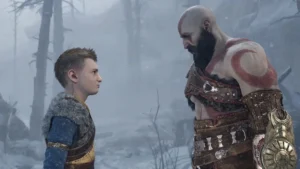
One of the most important aspects of God of War 6 is Kratos’ continuation as a character.
He is no longer the Ghost of Sparta driven by rage. He is now:
- A father who let his son choose his own path.
- A god who chose mercy.
- A leader who may rebuild instead of destroy.
This evolution changes the entire tone of the franchise.
Will Kratos Still Be the Main Character?
Yes, most likely. Although Atreus (Loki) is now traveling alone, Santa Monica Studio has built the rebooted saga around Kratos’ growth. Removing him entirely would undermine that arc.
However, a split narrative is possible:
- Kratos rebuilding in a new land.
- Atreus exploring Giant lore elsewhere.
This dual structure could define the gow next experience.
Could Atreus Get His Own Game?
Many fans believe the God of War Ragnarok sequel might focus more heavily on Atreus.
At the end of Ragnarök:
- Atreus leaves to search for Giants.
- He embraces his Loki identity.
- He steps into independence.
This setup is perfect for either:
- A full Atreus spin-off.
- A shared protagonist system in God of War 6.
If Atreus leads part of the game, expect:
- More agility-based combat.
- Magic-focused abilities.
- Greater narrative exploration.
Still, Kratos remains the heart of the franchise.
Gameplay Evolution in God of War 6
ZThe combat system introduced in 2018 and refined in Ragnarök is already exceptional. But the future game must innovate.
Possible improvements include:
- Expanded weapon variety.
- New elemental systems.
- Larger semi-open regions.
- More vertical exploration.
A new mythology would justify new combat mechanics.
For example, an Egyptian setting might introduce:
- Sand-based traversal mechanics.
- Solar god powers.
- Massive temple boss arenas.
Every gow next entry historically reinvents gameplay. Expect nothing less.
Performance Matters in Story-Heavy Action Games
Games like God of War 6 rely heavily on:
- Cinematic timing.
- Precision combat.
- Fluid camera transitions.
- Quick reaction inputs.
Even small performance issues can break immersion. If you play online titles or action-heavy games regularly, tools like ExitLag help stabilize your connection, reduce packet loss, and optimize routing. While God of War itself is single-player, maintaining a stable gaming setup across all your games ensures smoother performance overall. When you’re facing a mythological god, the last thing you want is lag.
When Could God of War 6 Release?
There is no official release date yet. However, we can analyze development patterns:
- Santa Monica Studio released God of War (2018).
- Ragnarök launched four years later in 2022.
If that cadence continues, God of War 6 could arrive around 2026 or later. Game development cycles are longer now. Especially for AAA titles built for PlayStation 5 hardware.
Expect:
- A full PS5-exclusive experience.
- Advanced graphics.
- Larger world scope.
The God of War Ragnarok sequel will likely push the console to its limits.
Will It Still Be Called God of War 6?
Probably not. The reboot avoided numbering. Instead of “God of War 4,” it was simply God of War (2018). The next title may follow that pattern.
Still, fans refer to it as God of War 6 because it is technically the sixth main installment. The official name will likely reflect the new mythology.
For example:
- God of War: Pantheon
- God of War: Ascension II
- God of War: Rebirth
Whatever the name, the legacy continues.
Why God of War 6 Could Redefine the Franchise
The Norse saga was about breaking cycles. The next chapter could be about:
- Redemption.
- Leadership.
- Rebuilding broken worlds.
Kratos has evolved from a destroyer of Olympus to a symbol of hope. That narrative shift is massive. The Norse ending did not close the book. It opened a new one and that is why the anticipation for God of War 6 is so intense.
The franchise has matured. The storytelling has deepened. And the next mythology could elevate it even further. In the end, the future game will not just be another sequel. It will be the next evolution of Kratos’ legend.