

Choosing the right rainbow six siege operators is one of the most important decisions in every ranked match. Because Rainbow Six Siege is built around tactical coordination, gadget synergy, and precise gunplay, operator selection directly impacts your chances of winning from the preparation phase to the final seconds of a round.
Moreover, understanding rainbow six siege operators goes far beyond knowing their weapons. Each character brings unique gadgets, utility, and strategic value to the team composition. Therefore, mastering their strengths and weaknesses is essential for climbing the competitive ladder consistently.
So, what are rainbow six siege operators and why are they so critical to success? In simple terms, they are specialized characters divided into Attackers and Defenders, each equipped with distinct tools designed to breach, defend, gather intel, or deny access. Consequently, your team’s coordination and synergy depend heavily on selecting operators that complement one another.
Additionally, while strategy and map knowledge are crucial, performance stability also plays a decisive role. That is where ExitLag comes in, ensuring that your tactical execution remains smooth and responsive during high-pressure moments.
Understanding the operator list and role distribution
The operator list in Rainbow Six Siege continues to grow with every season. As Ubisoft introduces new characters, the tactical depth expands significantly. Consequently, players must constantly adapt their strategies and compositions.
Attacker roles and responsibilities
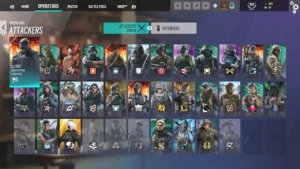
Attackers focus on gaining map control, breaching reinforced walls, and eliminating defensive setups. However, their success depends on coordination and timing.
Key attacker responsibilities include:
- Breaching reinforced surfaces
- Clearing defender gadgets
- Gathering drone intelligence
- Applying pressure during executes
Furthermore, attackers must manage time efficiently. Since rounds are limited, hesitation can cost victory.
Defender roles and map control
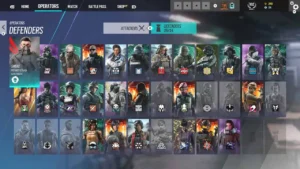
On the other hand, defenders specialize in fortifying objectives and denying entry. They use traps, cameras, and denial gadgets to disrupt attacking plans.
Defensive responsibilities typically involve:
- Reinforcing key walls and hatches
- Setting up entry denial devices
- Gathering real-time information
- Delaying the attacking push
Therefore, understanding role distribution ensures balanced team compositions in both casual and ranked environments.
Best operators and team synergy in ranked matches
Selecting the best operators depends heavily on the map, bomb site, and enemy strategy. However, synergy remains the ultimate deciding factor.
Top attackers for coordinated pushes
Certain attackers consistently perform well in ranked play due to their versatility and reliability. Hard breachers, anti-gadget specialists, and entry fraggers often form the backbone of competitive lineups.
For example, pairing a hard breacher with a utility-clear specialist ensures smoother wall openings. Consequently, defenders have fewer opportunities to deny entry.
Strong defenders for objective control
Similarly, defenders who excel at denial and intel gathering provide immense value. Anchor operators can hold angles while roamers apply pressure elsewhere.
To build a balanced defensive lineup:
- Include at least one wall denial operator.
- Add an intel-gathering specialist.
- Choose one roaming disruptor.
- Secure an anchor with strong area control.
Meanwhile, even the best composition loses impact if lag interferes during critical gunfights. ExitLag optimizes routing to reduce latency spikes, ensuring your shots register precisely when it matters most.
Operator abilities and attacker defender balance
Operator abilities define each character’s tactical identity. Because of this, understanding gadget mechanics is essential for strategic depth.
Breach, denial, and utility management
Hard breachers open reinforced walls. Denial operators counter those attempts. Utility specialists clear traps and defensive gadgets.
As a result, every round becomes a tactical chess match. Attackers attempt to create space, while defenders aim to waste time and resources.
Intel gathering and information warfare
Information is power in Rainbow Six Siege. Drones, cameras, and tracking devices provide crucial insights.
Balanced attacker defender compositions ensure that both teams can contest map control effectively. Without intel, even mechanically skilled players struggle to make informed decisions.
Consequently, low latency becomes critical during drone usage and camera switching. ExitLag stabilizes data routing so information updates remain instant and accurate.
Tactical operator guide for improving performance
An effective operator guide focuses not only on gadgets but also on positioning, communication, and timing.
How to master new operators efficiently
When learning a new operator:
- Study their gadget limitations.
- Practice recoil control in training modes.
- Watch high-level gameplay examples.
- Apply them in unranked matches before ranked play.
This structured approach accelerates mastery.
Avoiding common operator mistakes
Many players misuse gadgets due to impatience or poor timing. For example, deploying utility too early can make it easier for opponents to counter.
Therefore, patience and map awareness are crucial. Additionally, maintaining consistent performance with stable ping reduces the risk of misplays caused by delayed reactions.
ExitLag helps maintain smoother connections by selecting optimized routes to game servers. As a result, your reaction time reflects skill rather than connection quality.
Performance comparison: stable vs unstable connection
In tactical shooters, milliseconds matter. The table below highlights how connection stability impacts gameplay:
| Aspect | Unstable Connection | With ExitLag Optimization |
| Shot registration | Inconsistent | More reliable |
| Gadget deployment delay | Noticeable lag | Minimal delay |
| Drone responsiveness | Sluggish | Immediate feedback |
| Peek advantage | Risky | More controlled |
| Ranked match consistency | Variable | Stable performance |
Clearly, tactical execution improves significantly when latency is reduced.
Advanced strategies for competitive operator selection
As players climb higher ranks, operator bans and counter-picks become more influential. Therefore, flexibility is key.
Adapting to operator bans
Ranked matches include ban phases that remove certain operators from play. Consequently, teams must prepare alternative strategies.
For example:
- If a primary hard breacher is banned, coordinate secondary breach tools.
- If a key denial operator is removed, reinforce differently.
Preparation ensures adaptability.
How to choose rainbow six siege operators for each map
Map knowledge directly influences operator selection. Because each map features unique choke points, vertical play opportunities, and entry routes, choosing the right operators becomes a strategic necessity.
For example, maps with multiple reinforced walls favor hard breachers and denial counters. Meanwhile, vertically complex maps reward operators with strong soft destruction tools. Therefore, adapting picks to terrain layout increases round win probability significantly.
Best rainbow six siege operators for solo queue players
Solo queue presents unique challenges due to limited communication. Consequently, self-sufficient operators often perform better in this environment.
Entry fraggers with strong weapons, intel-gathering attackers, and flexible defenders provide consistent value even without coordinated teammates. Moreover, operators with independent utility allow solo players to create impact without relying heavily on synergy.
As a result, selecting versatile characters improves consistency across unpredictable matches.
Advanced rainbow six siege operators strategies for high elo
At higher ranks, mechanical skill becomes more balanced across teams. Therefore, strategic depth and operator mastery determine the outcome of matches.
High-elo players focus on utility trading, coordinated executes, and layered defenses. Additionally, they optimize crossfires and vertical pressure to force mistakes.
Because of this, advanced strategies require precise timing and flawless gadget deployment. Every misstep can shift momentum instantly.
How rainbow six siege operators impact team composition balance
Balanced compositions reduce weaknesses and improve adaptability. Teams that stack similar roles risk lacking critical utility during executes or retakes.
Ideally, lineups should include breach potential, denial, intel gathering, and fragging power. Furthermore, role distribution prevents over-reliance on a single player.
Consequently, understanding how operators complement one another creates stronger defensive setups and more efficient attacking strategies.
Optimizing rainbow six siege operators performance with low latency
Even the strongest operator lineup loses value if performance issues interfere. Because Rainbow Six Siege rewards split-second reactions, stable ping and minimal packet loss become decisive advantages.
Optimized routing solutions reduce latency spikes, improving shot registration and gadget responsiveness. As a result, players execute coordinated pushes with greater precision.
Ultimately, pairing strong operator knowledge with stable connectivity elevates overall competitive performance.
Building adaptable team compositions
Successful teams often develop multiple preset compositions for each map. This preparation reduces hesitation during pick phases.
Moreover, communication strengthens synergy. Callouts, drone coordination, and crossfires elevate overall effectiveness.
Once again, performance stability plays a silent but critical role. Smooth connectivity ensures that coordinated pushes remain synchronized.
Psychological factors and operator confidence
Confidence influences performance in competitive shooters. Mastery of specific operators builds familiarity and reduces hesitation.
Furthermore, players who trust their connection environment are less distracted by technical issues. ExitLag removes uncertainty related to sudden lag spikes, allowing full focus on strategy and aim.
As a result, combining mechanical practice with optimized routing fosters consistent improvement.
Long-term improvement with rainbow six siege operators and ExitLag
Climbing ranks requires consistent development. Map knowledge, aim training, and communication all contribute to growth. However, mastering rainbow six siege operators remains at the core of strategic excellence.
Additionally, refining your understanding of gadget timing, synergy, and counterplay creates measurable progress over time. The deeper your familiarity with rainbow six siege operators, the more adaptable you become in high-pressure matches.
Ultimately, competitive success depends on preparation, teamwork, and performance stability. By combining tactical mastery of rainbow six siege operators with optimized connectivity from ExitLag, players gain a decisive edge. In the end, those who invest in strategy and connection quality position themselves for sustained improvement and consistent ranked victories with rainbow six siege operators.